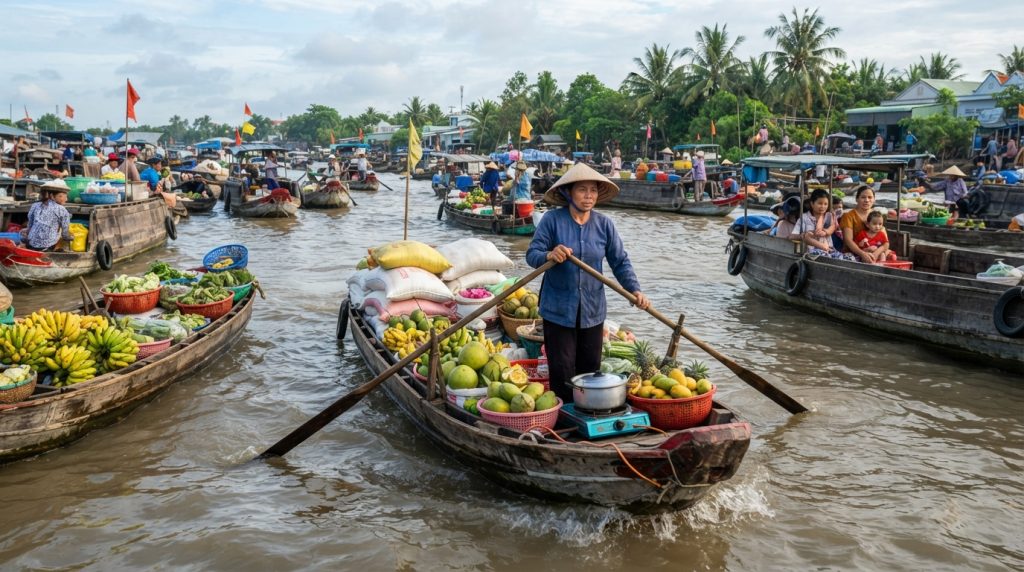
Thai cuisine combines intense flavors, aromatic ingredients, and cooking styles that vary significantly from one region to another. Tangy soups, creamy curries, spicy salads, stir-fried noodles, and coconut-based desserts are all part of a culinary tradition that is far more diverse than what is typically found outside the country.
This selection features 10 typical Thai dishes that are easy to find at markets, local restaurants, and street stalls. In addition to explaining the ingredients in each recipe, you’ll find information about their flavor, level of spiciness, and the best way to order them while traveling.
What Characterizes Thai Cuisine
One of the most recognizable features of Thai cuisine is the balance between sweet, sour, salty, spicy, and—in some dishes—slightly bitter flavors. These flavors don’t all have to be equally intense: each recipe aims for a specific combination using ingredients such as lime, tamarind, palm sugar, fish sauce, coconut milk, and chili peppers.
Fresh, aromatic ingredients also play a major role. Lemongrass, galangal, makrut lime leaves, cilantro, garlic, ginger, and various varieties of basil contribute aromas that set these dishes apart from those of other Asian cuisines.
Food varies depending on the region of the country. In the northeast, hearty salads and glutinous rice are common; the north features curries and soups with their own regional influences; the central region offers numerous stir-fries and rice dishes; and the south is known for its bold curries and abundance of seafood.
10 Must-Try Traditional Thai Dishes
Many of these dishes can be adapted depending on the cook, the province, and the ingredients available. As a result, the same recipe may taste different in Bangkok, Chiang Mai, Phuket, or a small town in the countryside.
The level of spiciness can also vary greatly. Although restaurants in tourist areas often adapt their recipes, it’s a good idea to clearly specify if you want less chili, and keep in mind that “mild” can still be intense for someone whose palate isn’t used to it.
1. Tom yum goong: a sour and spicy soup
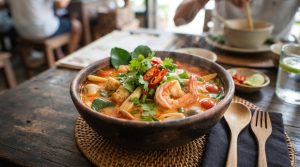
Tom yum is one of the best-known Thai soups. Its broth combines sour, salty, spicy, and aromatic flavors thanks to ingredients such as lemongrass, galangal, makrut lime leaves, lime juice, chili, and fish sauce.
The version with shrimp is called tom yum goong, although it can also be made with chicken, fish, seafood, or mushrooms. Some variations have a clear broth, while others include evaporated milk or a creamy sauce, so it’s a good idea to ask which version they serve before ordering.
2. Som tam: green papaya salad
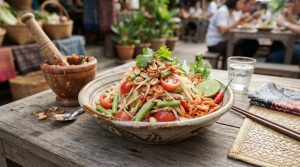
Som tam, also spelled som tum, is a crunchy salad native to northeastern Thailand. It is prepared by pounding grated green papaya, garlic, chili peppers, tomatoes, long beans, lime juice, sugar, and fish sauce in a mortar.
Depending on the recipe, it may include peanuts, dried shrimp, fermented crab, or other seasonings. It is usually served with sticky rice and grilled chicken, a combination that balances the spiciness and acidity of the salad.
3. Khao niao mamuang: mango sticky rice
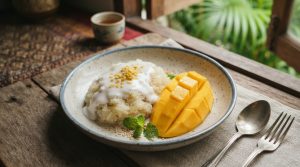
Known in Spanish as “arroz con mango,” khao niao mamuang is one of the most popular Thai desserts. It combines steamed sticky rice with a slightly sweet coconut milk sauce and ripe mango cut into slices.
The dense texture of the rice contrasts with the juicy fruit and the creaminess of the coconut. Some versions include seeds, toasted mung beans, or a small amount of salted coconut sauce to balance the overall sweetness.
4. Pad Thai: Stir-Fried Rice Noodles
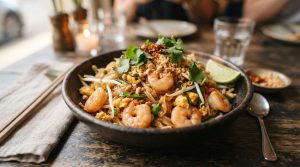
Pad Thai is probably the most well-known Thai dish internationally. It is prepared in a wok with rice noodles, egg, tofu, bean sprouts, and a sauce that typically combines tamarind, sugar, and fish sauce.
It can be served with shrimp, chicken, pork, or just vegetables, accompanied by crushed peanuts, lime, chives, and chili powder. A good pad thai keeps the noodles loose and strikes a balance between acidity, sweetness, and saltiness, without being overly oily.
5. Gaeng keow wan: Thai green curry
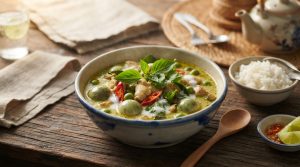
Gaeng keow wan is an aromatic, creamy green curry made with a paste that typically contains green chilies, garlic, lemongrass, galangal, and other spices. It is cooked with coconut milk, vegetables, Thai basil, and meat, fish, or tofu.
Despite its smooth texture, this curry isn’t always mild. The heat level depends on the amount and type of chili used, so it’s best to order it with caution if you have a low tolerance for spicy food. It’s usually served with jasmine rice.
6. Pad krapao: stir-fry with holy basil
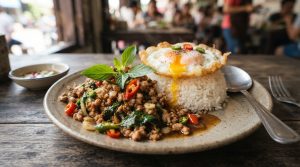
Pad krapao is one of Thailand’s most common everyday dishes. It consists of ground or chopped meat—usually pork, chicken, or beef—stir-fried over high heat with garlic, chili, sauces, and holy basil leaves.
It is usually served over white rice and can be topped with a fried egg that has crispy edges and a runny yolk. It’s a quick, bold, and very flavorful recipe in which basil provides the characteristic aroma, so a version made with regular basil may taste different.
7. Kuay teow moo daeng: noodles with red pork
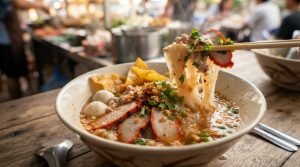
Kuay teow moo daeng is a noodle dish with roasted pork that is very common at local restaurants and specialty stalls. The pork, known as moo daeng because of its characteristic reddish color, is sliced and combined with noodles, vegetables, herbs, and seasonings.
It can be ordered with broth or as a dry dish, with the sauce and seasonings mixed directly into the noodles. It is common to find chili peppers, vinegar, sugar, and fish sauce on the table to adjust the flavor to your liking.
8. Panang: a thick, creamy curry
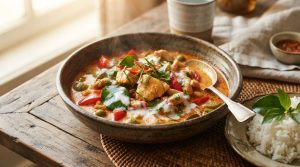
Panang is a thick curry, more concentrated and with less broth than other Thai varieties. The paste is mixed with coconut milk and is usually flavored with very finely chopped makrut lime leaves.
It is typically made with chicken, pork, or beef and served with jasmine rice. It tends to be sweet, salty, and moderately spicy, although the intensity varies from restaurant to restaurant. Its creamy texture makes it a good introduction to Thai curries.
9. Cha yen: Thai iced tea with milk

Cha yen is a cold, sweet, and creamy drink found in coffee shops, markets, and street stalls. It is made with a concentrated black tea infusion, sugar, ice, and condensed or evaporated milk.
Its sweetness helps mellow the aftertaste of very spicy dishes, although some versions contain quite a bit of sugar. To cut down on the sugar, you can ask for less condensed milk or less syrup and enjoy a more pronounced tea flavor.
10. Thai roti: a crispy pancake from the market

Thai roti is a thin pancake cooked on a griddle until it is golden brown and crispy. Although it draws inspiration from the flatbreads of South Asia, in Thailand it has become a common treat at night markets and street food stalls.
The basic version is served with sugar and condensed milk, but you can also add banana, chocolate, egg, coconut, or other fillings. It’s made fresh, cut into small squares, and is especially delicious when eaten right after it’s made.
Which Thai dish to choose based on your tastes
When faced with an extensive menu, it’s helpful to look at the type of preparation and the dominant flavors. If you’re looking for something fresh, you can start with som tam, while curries and soups offer a more aromatic and intense experience.
The heat level indicated in this table is for reference only, as each restaurant uses different amounts of chili peppers. To avoid surprises, it’s best to confirm the heat level when ordering and clearly specify that you want a mild version or one without added chili peppers.
| Dish | Type | Dominant flavor | Usual heat level |
|---|---|---|---|
| Tom Yum Goong | Soup | Tart and aromatic | High |
| Som tam | Salad | Sour, salty, and fresh | Medium or high |
| Khao Niao Mamuang | Dessert | Sweet and creamy | Not spicy |
| Pad Thai | Stir-fried noodles | Sweet, sour, and salty | Low |
| Gaeng Keow Wan | Curry | Creamy and herbal | Medium or spicy |
| Pad Krapao | Stir-fried | Spicy and aromatic | Medium or hot |
| Red Kuay Teow | Noodles | Salty and mild | Low |
| Panang | Curry | Creamy and Spicy | Mild or medium |
| Cha yen | Drink | Sweet | Not spicy |
| Thai Roti | Dessert | Sweet and crunchy | Not spicy |
For a first taste, a well-balanced combination might include pad thai or pad krapao as the main course, som tam to share, and mango rice for dessert. This way, you can sample a variety of textures and flavor profiles without relying on a single dish.
Tips for Ordering Food in Thailand
Eating at local food stalls and restaurants is a great way to experience an essential part of the country’s culture. In cities like Bangkok, you’ll find everything from small businesses specializing in a single dish to markets with dozens of options; our guide to what to see and do in Bangkok can help you incorporate these experiences into your itinerary.
Before making your choice, take a look at where the locals eat, check that the ingredients are fresh, and prioritize dishes that are cooked to order. These simple guidelines will help you enjoy street food with greater peace of mind.
- It indicates the level of spiciness: order the mild version if you’re not used to chili peppers.
- Ask about fish sauce: many recipes that appear to be vegetarian actually contain it.
- Check for allergens: peanuts, shellfish, soy, eggs, and coconut milk are common.
- Try regional specialties: the selection varies between the north, northeast, central, and southern regions.
- Share several dishes: it’s a practical way to discover more flavors in a single meal.
The season and itinerary also influence the types of markets, fruits, and experiences available. Before planning your trip, find out the best time to visit Thailand and tailor your culinary visits to the climate of each region.
Frequently Asked Questions About Thai Food
Menus may include different transliterations for the same dish, so it is common to find names written in various ways. Tom yum also appears as tom yam, som tam as som tum, and pad krapao as pad kra pao, but these spelling differences do not always indicate different recipes.
It’s also common for restaurants to adjust ingredients and spice levels based on their clientele. Asking before you order can help you distinguish between a version tailored for tourists and one that’s closer to the local version of the dish.
What is Thailand’s most typical dish?
Pad Thai is the best known internationally, but it does not, on its own, represent the country’s entire culinary tradition. Pad Krapao, som tam, noodle soups, and curries are all part of a much broader everyday diet.
Is all Thai food spicy?
No. There are mild dishes, such as certain types of noodles, rice dishes, soups, and desserts, although sauces served on the side may contain chili peppers. The best option is to ask and request a dish prepared to your desired level of spiciness.
Is it easy to find vegetarian food?
In tourist areas, there are more and more options, but it’s a good idea to check the ingredients. Fish sauce, shrimp paste, meat broth, and dried shrimp may be included in recipes that appear to be vegetarian at first glance, so you should ask for a vegetarian version prepared specifically for you.
Where can you find the best Thai food?
There isn’t just one specific area, as each region has its own specialties. Markets, family-run restaurants, and stalls specializing in a single dish often offer interesting dishes; you can also enhance your experience with this guide to surprising Thai foods.
What should I order if it’s my first time?
Pad Thai, Panang curry, and noodles with pork are usually a good place to start. From there, you can move on to more intense flavors like som tam, tom yum, or green curry, learning to recognize the ingredients and aromas of each recipe.
Experience Thailand Through Its Cuisine
Trying the local cuisine gives you a better understanding of the country’s customs, products, and regional differences. The most practical tip is to alternate between familiar recipes and local specialties, visit markets, and ask about the dishes unique to each city.
At One More Destination, we design custom trips through Thailand tailored to each traveler’s pace and interests. We can incorporate markets, local restaurants, and culinary experiences into a well-rounded itinerary so that food becomes a real part of the trip.