So-called ” unusual Thai food ” brings together ingredients and cooking methods that may come as a surprise to travelers, even though they are part of regional traditions, local markets, or family customs. Raw shrimp, ant eggs, fried insects, chicken feet, and bamboo worms reveal a side of the country’s cuisine that’s very different from pad thai or green curry.
This updated guide explains what each dish contains, how it is typically prepared, and what precautions you should take. To better understand the contrast between these specialties and the most well-known recipes, check out our selection of must-try Thai dishes.
Why These Dishes Are So Surprising
Our perception of what is unusual depends largely on the culinary culture we grew up with. Ingredients that are considered unusual in Spain may be appreciated in Thailand for their texture, seasonal availability, or connection to rural cuisine.
It’s also important to avoid the misconception that all Thais eat these specialties frequently. Many dishes are associated with specific regions, such as Isan or northern Thailand, while others are served as snacks at night markets or stalls catering to curious travelers.
The 10 Most Unusual Thai Dishes
The list combines traditional dishes, street snacks, and regional specialties. Some are easy to find, while others require a visit to local markets or specialty restaurants off the beaten path.
Transliterations of Thai can vary, so the same dish may be written in several different ways. Rather than memorizing the exact spelling, it’s helpful to know its main ingredients and how it’s prepared.
1. Goong ten: the “dancing” shrimp
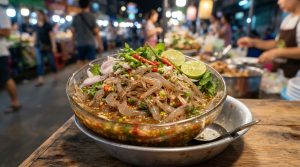
Goong ten, also spelled kung ten, roughly means “dancing shrimp.” It is made with small freshwater shrimp that are traditionally served alive or freshly caught, mixed with lime, fish sauce, chili, aromatic herbs, onion, and ground roasted rice.
The way the shrimp move when they come into contact with the dressing explains the dish’s name. In addition to its visual appeal, it offers tart, salty, spicy, and herbaceous flavors, although eating it raw poses a food safety risk that should be considered before trying it.
2. Goong chae nam pla: raw shrimp with fish sauce
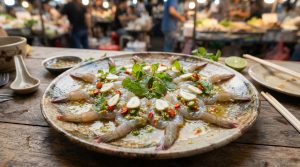
Goong chae nam pla is made with raw shrimp marinated or dressed with fish sauce, lime, garlic, and chili. It is usually served cold and may include slices of bitter melon, cabbage, or other crisp vegetables to balance the intensity of the dressing.
It is often compared to ceviche or sashimi because of its texture, but there are significant differences in the seasoning and flavor profile. Lime and fish sauce do not replace thorough cooking, nor do they alone eliminate all microorganisms or parasites.
3. Khai mot daeng: red ant eggs
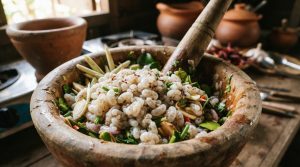
Khai mot daeng are the eggs, larvae, and pupae of weaver ants, which are particularly prized in Isan and some northern regions. They are used in soups, omelets, salads, and curries, so they are not a single, distinct dish but rather a seasonal ingredient.
Its texture is tender and slightly creamy, while its flavor can have a slightly tart and fresh note. In certain dishes, it is combined with herbs, chili peppers, shallots, fish sauce, and other ingredients that enhance this contrast.
4. Malaeng thot: fried insects
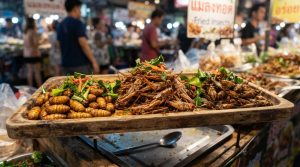
Malaeng thot is a generic term for various types of fried insects, including crickets, grasshoppers, silkworms, beetles, and mole crickets. They are cooked until crispy and are usually seasoned with salt, pepper, soy sauce, or aromatic powder.
It is one of the most accessible experiences for those who want to try something different, as it is available at certain markets and street stalls. People with shellfish allergies should exercise special caution regarding possible cross-reactions and consult a healthcare professional before consuming insects.
5. Pak ped: fried or grilled duck bill
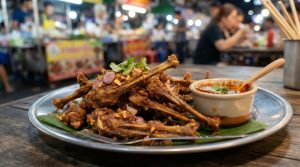
“Pak ped “ literally means “duck bill.” Depending on the restaurant, it may be marinated, fried, roasted, or served as part of a dish that makes use of the skin, connective tissue, and small pieces of meat attached to it.
More than just a hearty dish, it’s enjoyed for its crunchy, gelatinous texture. It can be served with a spicy or tangy sauce, and is usually served as an appetizer to share rather than as a main course.
6. Larb lueat nuea: raw, bloody beef
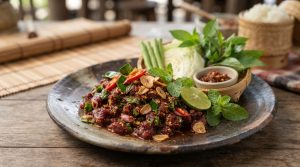
The name and recipe may vary by region, but it generally refers to a dish made with raw beef that has been minced or chopped, mixed with blood, spices, chili peppers, herbs, toasted rice, and other seasonings. It is related to regional variations of larb eaten in the north and northeast.
It is one of the dishes that requires the greatest caution because raw meat and blood may contain microorganisms or parasites. A reasonable alternative for a traveler is to order a well-cooked version and preserve the spice profile without taking the same risk.
7. Teen gai: chicken feet
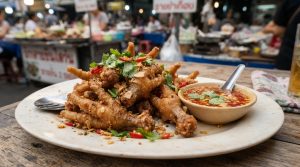
“Teen gai” is a colloquial term for chicken feet, a common ingredient in many Asian cuisines. In Thailand, they can be served fried, boiled, stewed, roasted, or added to soups with herbs and spices.
The culinary appeal lies in the skin, tendons, and collagen, which produce a gelatinous or crunchy texture depending on the cooking method. They are eaten slowly, picking at the small bones, and are often enjoyed during casual conversations or shared meals.
8. Kob thot: fried frog
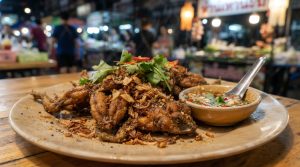
Kob thot means “fried frog” and can be prepared whole, cut into pieces, or coated with a crispy batter. Some versions include garlic, pepper, chili, aromatic herbs, or bold sauces.
Its meat is often described as tender and relatively lean, with a flavor somewhat reminiscent of chicken. However, it has a firmer texture and small bones, so it’s best to eat it carefully.
9. Nu na yang: grilled field rat
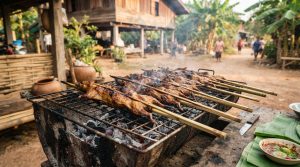
“Nu na yang” refers to roasted field rats, which are primarily associated with agricultural settings and rural kitchens. They should not be confused with urban rats: these are animals caught in rice paddies or other cultivated areas and prepared as small game.
It can be grilled over charcoal and served with vegetables, rice, or spicy sauces. Its availability depends on the region and the season, so it is not a common dish in tourist restaurants, nor is it a specialty you should seek out without knowing its origin well.
10. Rot duan: fried bamboo worms
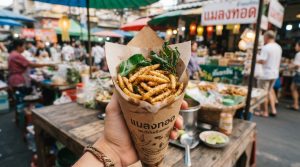
Rot duan are larvae that live in certain species of bamboo. Their name can be translated as “express train,” a popular comparison inspired by their elongated, segmented shape.
They are usually fried until light and crispy, and then seasoned with salt or other seasonings. Among edible insects, they are often appealing because of their mild flavor and snack-like texture, without the bitterness that some people expect.
Quick Comparison of the Dishes
Not all of these specialties present the same level of difficulty for a traveler. Texture, flavor intensity, and cooking method all influence the experience and the level of caution required.
The following table helps distinguish between cooked options and raw or “live” preparations. This is a general guide, as each vendor may adapt the recipe.
| Dish | Main ingredient | Typical preparation | Difficulty for beginners |
|---|---|---|---|
| Goong ten | Small shrimp | Live or raw with seasoning | Very high |
| Goong chae nam pla | Shrimp | Raw with fish sauce | High |
| Khai mot daeng | Eggs and ant larvae | Soups, omelets, or salads | Medium |
| Malaeng thot | Assorted Insects | Fried and seasoned | Medium |
| Pak Ped | Duck Bill | Fried or roasted | High |
| New Larb Lueat | Veal and blood | Raw with spices | Very high |
| Chicken | Chicken legs | Fried, boiled, or stewed | Medium |
| Kob thot | Frog | Frita | Medium |
| Nu na yang | Field mouse | Grilled | High |
| Rot duan | Bamboo worms | Fried | Low or medium |
As a first step, rot duan, fried insects, or chicken feet allow you to experiment with unfamiliar textures without resorting to raw foods. Fried frogs may also be an easy option for those who already eat mild-flavored meats.
Goong ten, goong chae nam pla, and larb lueat nuea are at the opposite end of the spectrum. In these cases, curiosity should not take precedence over food safety, especially when the product’s origin or the cold chain is unknown.
How to Safely Try Unusual Foods
Street food is part of Thailand’s appeal, but it’s a good idea to watch how the ingredients are handled. A busy stall may have a higher turnover, although a steady stream of customers alone does not guarantee hygiene.
The WHO’s general food safety recommendations emphasize cooking food thoroughly, keeping raw and cooked foods separate, and maintaining proper temperatures. Following these principles helps reduce risks while traveling.
- Choose dishes that are cooked to order and served piping hot.
- Check that utensils, surfaces, and containers are clean.
- Avoid raw meat, blood, fish, or shellfish if you can’t verify their source.
- Remember that lime, chili peppers, alcohol, or fish sauce do not completely disinfect food.
- Ask about the ingredients if you have any allergies or intolerances.
- Do not consume animal-based foods if they have an unusual odor, are at an improper temperature, or show signs of poor preservation.
Young children, pregnant women, older adults, and travelers with weakened immune systems should especially avoid raw meat, seafood, eggs, and blood. If you have a severe allergy, it is also advisable to carry the appropriate medication and a written explanation in Thai.
Trying a local specialty should be a personal choice, not a test of courage. It’s also perfectly acceptable to decline dishes that contain live animals or ingredients whose sourcing doesn’t align with your ethical, health, or personal standards.
Frequently Asked Questions About the Strangest Thai Foods
The most common concerns relate to taste, availability, and safety. The answer varies depending on the region, the establishment, and the specific way each food is prepared.
Before ordering, it’s a good idea to show the name or a photo and confirm whether the dish is served raw, cooked, or very spicy. A simple question can prevent misunderstandings about the recipe.
Where can I find these dishes?
Fried insects and bamboo worms are sold at some night markets and street stalls. Ant eggs, field rats, and certain types of larb are more commonly found in the regional cuisines of the north and Isan.
Are all of these common dishes for Thais?
No. Some are part of local traditions, while others are eaten seasonally or only occasionally. Presenting them as everyday foods throughout the country would paint an oversimplified picture of Thai cuisine.
What’s the easiest dish to start with?
Rot duan is often one of the most affordable options due to its crunchy texture and mild flavor. Fried crickets, or kob thot, may also be more accessible than raw or blood-based dishes.
Are fried insects safe to eat?
It depends on the species, origin, storage, and handling. They should come from a reliable seller and be thoroughly cooked; in addition, people with shellfish allergies need to take extra precautions.
Is it safe to eat goong ten or raw shrimp?
Eating raw or live shellfish poses a greater risk than eating them fully cooked. Even if the dish is part of a local tradition, the acidic marinade does not eliminate all microbiological hazards.
A respectful way to discover Thai cuisine
These ten dishes show that Thai cuisine is much more diverse than its best-known international recipes. Approaching them with curiosity, respect, and an understanding of their cultural context helps us understand why certain ingredients are prized in some regions but rarely found in others.
You don’t have to try everything to enjoy your trip. Start with well-cooked dishes, ask questions before ordering, and choose restaurants that follow good food safety practices; that way, you can discover different flavors without taking unnecessary risks.