Tết Nguyên Đán, known simply as Tết, is the most important celebration on the Vietnamese calendar. It marks the beginning of the Lunar New Year and, for several days, transforms daily life across the country: families gather, ancestors are honored, homes are prepared to welcome a new cycle, and cities take on a completely different rhythm.
For anyone traveling in Vietnam, learning about Tết helps you understand many customs that might otherwise seem surprising and, at the same time, plan your travels more effectively. In 2026, the Vietnamese New Year was celebrated on February 17, marking the Year of the Horse in the Vietnamese zodiac.

What is Tết and why is it so important in Vietnam
?
Tết marks the beginning of a new year according to the traditional lunisolar calendar and usually falls between late January and mid-February. Its significance goes far beyond that of New Year’s Eve: it is a time of renewal, family reunions, remembering ancestors, and expressing good wishes for the months ahead.
It is often compared to the Chinese New Year because both celebrations usually fall around the same time on the calendar and share certain cultural elements. However, Tết has its own traditions, foods, symbols, and ways of celebrating that are unique to Vietnam. There are even differences in the zodiac: for example, the Vietnamese cycle includes the cat, whereas other Asian traditions use the rabbit.
The celebration is also not limited to the first day of the year. The festive atmosphere of Tết begins to take hold several weeks in advance, especially in markets, stores, and homes, and continues in the days that follow with family visits, ceremonies, and festive activities.
Vietnamese New Year Dates
Since it is based on the traditional calendar, the date of Tết changes every year. Here are some upcoming dates and the corresponding animal in the Vietnamese zodiac cycle:
| Year | Date of Tết | Animal |
|---|---|---|
| 2026 | February 17 | Ngọ (Horse) |
| 2027 | February 6 | Mùi (Goat) |
| 2028 | January 26 | Thân (Monkey) |
| 2029 | February 13 | Dậu (Rooster) |
| 2030 | February 2 | Tuất (Dog) |
| 2031 | January 23 | Hợi (Pig) |
These dates are particularly important when planning a trip because the days leading up to and following Tết see a large number of domestic travelers. Millions of people return to their hometowns to reunite with their families, which means the country’s normal routine is temporarily disrupted.
How Vietnam Prepares for the Arrival of Tết
The weeks leading up to the holiday are an essential part of the celebration. This period is commonly known as Tất Niên, the time of preparation before the end of the year. Families and businesses clean and decorate their spaces, buy food, gifts, and clothing, and the markets take on a particularly lively atmosphere.
House cleaning has a meaning that goes beyond the practical. It symbolizes leaving behind what belongs to the previous year in order to start the new cycle with a tidy and prepared home. It’s also common to fix minor damages, arrange flowers, and update some decorative elements.
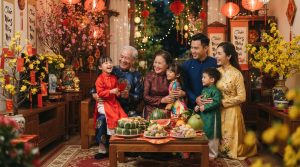
Markets, Flowers, and Last-Minute Shopping
In the days leading up to the New Year, the markets are filled with flowers, ornamental trees, food, and decorative items. It’s one of the most interesting times to stroll through a Vietnamese city because it offers a glimpse into family preparations and the importance that symbols of prosperity hold during this time of year.
Activity at train stations, on highways, and at airports also increases significantly. Returning to one’s family home is a central part of Tết, so many people travel long distances before the celebrations officially begin.
Preparing Traditional Meals
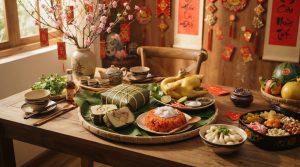
Cooking plays a prominent role in the preparations. One of the most recognizable dishes is bánh chưng, a glutinous rice cake traditionally wrapped in leaves, which is particularly associated with the northern part of the country. Preparing it can take several hours of cooking and is an activity shared by various family members.
In other regions, different recipes and variations appear, including bánh tét, as well as meats, pickles, glutinous rice, and sweets. It is also customary to offer candied fruits and small snacks to those who visit the home during the holidays.
How the Vietnamese New Year Is Celebrated
New Year’s Eve, known as Giao Thừa, marks the transition from the old year to the new. It is a time for gatherings, offerings, and celebrations that may include performances and fireworks in certain cities. Then comes the first day of Tết, set aside especially for the immediate family.
During those first few days, family ties and respect for elders take center stage in the celebration. People exchange good wishes, visit homes and temples, and perform symbolic gestures intended to start the year with harmony and good fortune.
Ancestor Worship and Family Gatherings
In many Vietnamese homes, there is a family altar dedicated to ancestors. During Tết, remembering past generations is part of the family celebrations, with offerings that may include food, fruit, flowers, or incense.
This connection to one’s ancestors helps explain why Tết has such a family-oriented atmosphere. Many people return to their hometowns and set aside these days to spend time with their parents, grandparents, and other relatives, even when they live hundreds of kilometers away during the rest of the year.
Lì xì: the red envelopes with lucky money
One of the most recognizable images of Tet is the red envelope. These are filled with lucky money, commonly known as lì xì , along with good wishes for the new year. Children are the usual recipients, although the tradition can also extend to other family members.
More than the amount given, what matters is the wish for prosperity and good fortune. That is why this gesture is part of a celebration in which the words, colors, and actions of the first few days hold strong symbolic meaning.
Xông đất: The Importance of the First Visit of the Year
A particularly interesting tradition is xông đất or xông nhà, which involves the first person to enter a home during the New Year. According to traditional belief, that first visit can symbolically influence the family’s fortune in the months to come.
For this reason, some families choose in advance a person they consider suitable to make that first visit. For a traveler, this explains why it is not advisable to show up at a home uninvited during the first hours or days of Tết.
Superstitions and Customs During Tết
The start of the year is surrounded by numerous beliefs about luck. The general idea is that avoid actions symbolically associated with loss, conflict, or misfortune and, instead, foster a positive atmosphere at home and in personal relationships.
Specific customs may vary from family to family and region to region, so they should not be viewed as rules that all Vietnamese people follow in exactly the same way. Even so, being familiar with them helps you behave with greater sensitivity when celebrating with local people.
- Avoid arguments: Starting the year angry is traditionally associated with a bad start.
- Don’t sweep right away: there’s a belief that doing so could drive good luck out of the home.
- Pay special attention to the first visitors: The xông đất tradition attaches special significance to the first person to enter a home.
- Exchange good wishes: Wishes for health, happiness, and prosperity are a regular part of gatherings.
- Wear newclothes: Many families associate new clothes with the renewal that the start of the year represents.
If you receive an invitation to participate in a family celebration, it’s best to observe and follow the hosts’ lead. Household customs have their own nuances, and a respectful attitude is more appropriate than trying to rigidly apply general rules.
Flowers, Colors, and Decorations for the Vietnamese New Year
During Tết, homes, shops, and streets are filled with flowers and ornamental trees. Red, yellow, and other vibrant hues are associated with prosperity, joy, and good wishes, which is why they appear frequently on envelopes, posters, lanterns, and ornaments.
Decorations also vary depending on the region of the country. In the north, peach blossoms are particularly characteristic, while in the south, yellow mai flowers stand out. Kumquat trees are also common and can be seen in homes, offices, and public spaces.
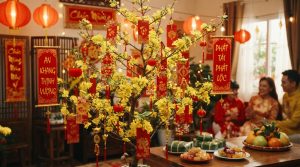
The days leading up to Tết are especially great for exploring flower markets, as they offer a chance to see the preparations in action before many families head home to celebrate privately. Afterward, during the first few days of the new year, some shopping areas may be much quieter.
Traveling to Vietnam During Tết: What You Need to Know
Traveling during the Vietnamese New Year can be a fascinating experience, but it requires a different kind of planning than at other times of the year. The main challenges lie in getting around and the availability of certain services, since many people travel within the country and numerous family-run businesses scale back their operations.
This does not mean that Vietnam is completely paralyzed. Accommodations, restaurants, and services are still available in the main tourist areas, although the selection may be more limited, and it’s a good idea to plan the key parts of your itinerary in advance. The situation also varies considerably between a major city, an established tourist destination, and a small town.
Book your travel well in advance
The days immediately before and after Tết see a significant increase in domestic travel. Trains, buses, and domestic flights may be in much higher demand than usual, so waiting until the last minute to book will considerably limit your options.
If your trip falls during this time, at One More Destination we tailor our itineraries to the specific logistics of the holiday season. When designing our custom trips to Vietnam, we take into account the order of the stops, transportation, and the availability of services to ensure that Tết doesn’t turn a great itinerary into a series of complications.
Do restaurants, stores, and attractions close?
Many small shops and family-owned businesses close for part of the first few days of Tết so their employees can celebrate with their families. Other establishments remain open or gradually resume operations, especially in areas with a large number of tourists.
That is why it is best to avoid making statements such as “the entire country is closed for a week.” Availability depends on the location, the establishment, and the specific day. It is advisable to confirm in advance any visits, restaurants, or transportation that are essential to your trip.
Why Now Might Also Be a Good Time to Visit Vietnam
With proper planning, visiting during Tết offers a perspective that’s hard to find at any other time of year. The flower markets, decorations, preparations, and the festive atmosphere leading up to the holiday provide a glimpse into an essential part of Vietnamese culture.
Major cities can also change dramatically during the first few days of the festival. Some streets that are normally bustling become quieter, revealing a side of Hanoi or Ho Chi Minh City that’s very different from the usual. For many travelers, that contrast ends up being one of the most memorable experiences of the trip.
What to Do If You’re in Vietnam During the New Year
The best way to experience Tết as a visitor is to combine observing public celebrations with respect for family spaces. The pre-holiday markets, decorated streets, temples, and certain downtown areas offer plenty of opportunities to soak up the atmosphere without intruding on private ceremonies.
It’s also important to accept that the pace of the trip will be different. Planning fewer activities and allowing for some flexibility usually works better than sticking to a very tight schedule during a few days when schedules and availability may change.
If you’re planning your itinerary from scratch, we can design a customized trip for you that takes the Vietnamese calendar into account. Adjusting your itinerary before booking transportation and accommodations allows you to experience the unique atmosphere of Tết without having to rely on services that may operate differently during this time.
Frequently Asked Questions About Tết in Vietnam
The Vietnamese New Year raises many questions among those planning their first trip to the country. The variable date, business closures, and differences compared to other Asian celebrations are the factors that most influence planning.
Below, we address the most common questions from a practical perspective. Specific circumstances may vary from year to year and by city, so it’s always a good idea to check transportation options and services before finalizing your itinerary.
When was Tet 2026?
The Tết festival of 2026 was celebrated on February 17th , marking the beginning of the Year of the Horse in the Vietnamese zodiac. Preparations began well in advance, and the festive atmosphere continued for several days afterward.
When is Tết 2027?
The next Vietnamese New Year will be on February 6, 2027, which corresponds to the Year of the Goat. Those planning to travel during this time should pay special attention to domestic travel during the days leading up to and following the holiday.
Are Tết and the Chinese New Year the same thing?
Not exactly. Although they usually fall on the same dates and share some cultural elements, Tết is the Vietnamese celebration of the Lunar New Year and has its own traditions, cuisine, and unique characteristics. Treating it simply as a version of the Chinese New Year overlooks an important part of Vietnam’s cultural identity.
Is it a bad idea to travel to Vietnam during Tết?
Not necessarily. It can be a fascinating time to explore the country, as long as you plan your trip with the high demand for transportation and the temporary reduction in some services in mind. For a very rigid itinerary or one with numerous trips, however, these dates require more advance planning.
How long does Tết last?
The first day of the year is the centerpiece of the celebration, but Tết should be understood as a broader period. Preparations begin beforehand, and gatherings, visits, and festivities continue for several days, with a gradual return to normal activities.
How do you wish someone a Happy New Year in Vietnamese?
One of the most common expressions is “Chúc Mừng Năm Mới” , which means wishing someone a happy new year. Learning it is a simple and welcome way to participate in the festive atmosphere when traveling through Vietnam during this time.
Experiencing Tết by Understanding the Country’s Rhythm
Tết offers insight into aspects of Vietnam that go far beyond a mere celebration: the importance of family, respect for ancestors, hospitality, and the idea of starting the year with good omens. Markets, food, flowers, and rituals are all part of a celebration deeply rooted in family life.
For travelers, the best strategy is to combine curiosity with planning. Booking key trips in advance, respecting private celebrations, and leaving room for changes allows you to enjoy one of the most culturally rich times on the Vietnamese calendar and discover the country from a different perspective.