Bangkok combines monumental temples, historic neighborhoods, markets, street food, and a vibrant urban life in a city that can be bewildering at first but captivating just a few hours later. This guide brings together the must-see attractions, a suggested itinerary for three days, and practical tips for getting around without wasting time.
The Thai capital offers many different types of travel experiences: cultural, culinary, urban, or as the first stop on a tour of the country. Setting aside two to three days allows you to experience its main contrasts, although it’s a good idea to tailor your itinerary to the heat, the distances, and each traveler’s pace.
Bangkok, Krung Thep, and the Origins of the Thai Capital
Bangkok is known in Thai as Krung Thep, a term that is often translated as “City of Angels.” Its full ceremonial name is much longer, but residents use this abbreviated version to refer to a metropolis that stretches along both banks of the Chao Phraya River.
The history of the current capital began after the fall of Ayutthaya in 1767. After a brief period during which Thonburi served as the political center, King Rama I moved the capital to the east bank of the river in 1782 and founded the city of Rattanakosin, the origin of Bangkok’s historic district.
The river, canals, and natural walls served a defensive purpose and facilitated the transport of people and goods. That connection to water continues to define Bangkok: boats remain a practical and appealing way to explore the city, especially around the Grand Palace, Wat Pho, Wat Arun, and the neighborhoods of Thonburi.
What to See in Bangkok on Your First Visit
Most of the historical monuments are concentrated in Rattanakosin and along the Chao Phraya River. The Grand Palace, Wat Pho, and Wat Arun make up the most comprehensive sightseeing route and can be visited in a single day if you start early.
Bangkok, however, cannot be fully appreciated by visiting only its temples. It’s a good idea to set aside time to stroll through Chinatown, sample its cuisine, take a river cruise, and explore its shopping districts. Alternating between sightseeing and experiencing everyday life makes the trip more varied and prevents the feeling of going from one similar attraction to the next.
The Grand Palace and the Temple of the Emerald Buddha
The Grand Palace was established as the royal residence in 1782 and continues to be used for certain official ceremonies. Within the complex is Wat Phra Kaew, which houses the Emerald Buddha, one of the country’s most revered religious images. The richness of its roofs, murals, guardian figures, and pavilions calls for a leisurely visit.
It is recommended that you arrive first thing in the morning, bring water, and avoid scheduling other visits with a too-tight schedule. Appropriate attire is required for entry, so shoulders and legs must be covered, and torn, see-through, or excessively tight clothing should be avoided. Before visiting, be sure to check the hours and admission policies on the Gran Palacio’s official website.
Wat Pho and its Reclining Buddha
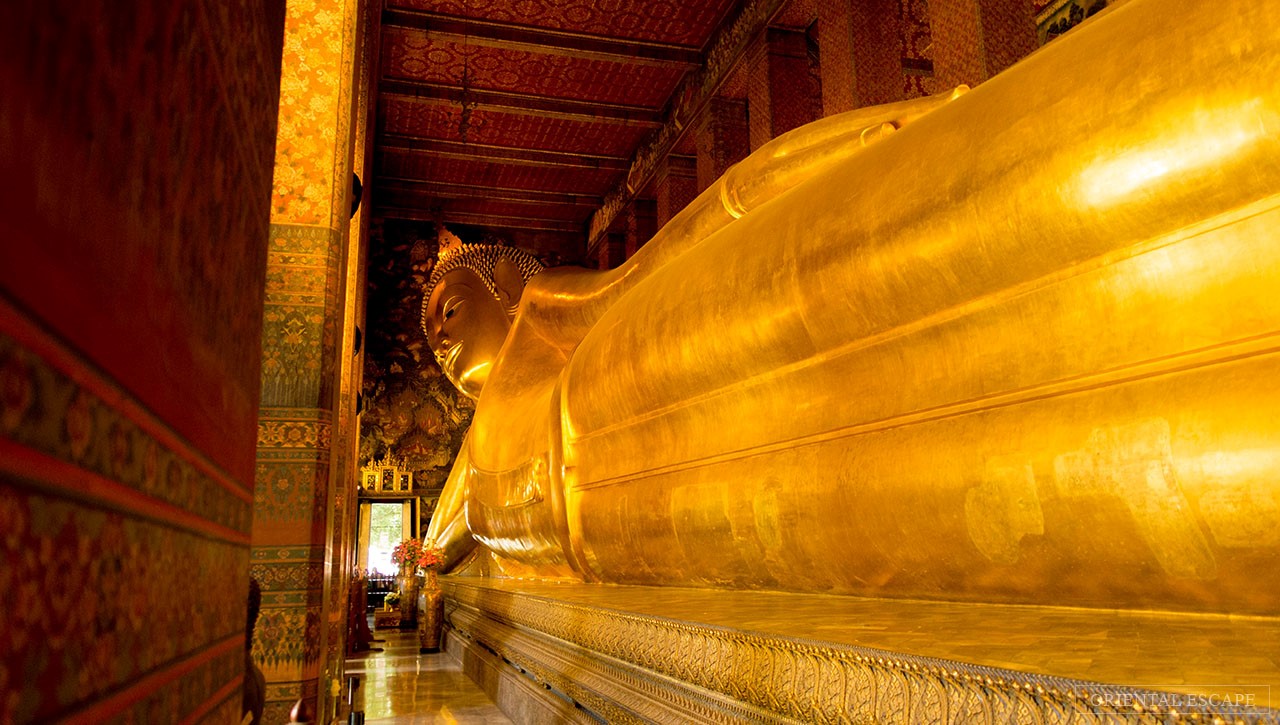
Just a few minutes’ walk from the Grand Palace is Wat Pho, famous for its 46-meter-long reclining Buddha. The sheer size of the statue is impressive, but the soles of its feet—decorated with mother-of-pearl—as well as the courtyards, stupas, and galleries surrounding the complex are also worth seeing.
Wat Pho is closely associated with traditional medicine and the teaching of Thai massage. Its school opened in 1955 and continues to provide training, allowing visitors to experience both the temple’s religious heritage and a living therapeutic tradition.
Wat Arun, the Temple of the Dawn
Wat Arun stands on the west bank of the Chao Phraya River and is notable for its large central tower, decorated with porcelain pieces and floral motifs. The short ferry ride from the Wat Pho area is part of the experience and offers a different view of the river.
The late-afternoon light highlights its contours, although the site can get crowded during peak hours. An alternative is to visit in the morning and return to the opposite bank at sunset to admire its illuminated silhouette. The view from the river is one of Bangkok’s most recognizable sights.
The Chao Phraya River and the Thonburi Canals
The Chao Phraya River serves as a vast waterway, connecting numerous points of interest. Public boats allow you to travel between piers, while a tour of the Thonburi canals reveals wooden houses, small temples, and scenes of daily life away from the main thoroughfares. Cruising along the river helps you understand how Bangkok grew up around the water.
Before hiring a private boat, it’s a good idea to agree on the itinerary, duration, and total price. For simple trips, regular services are usually sufficient. A boat is especially useful when road traffic slows down.
Chinatown, Talat Noi, and Song Wat
Yaowarat, Chinatown’s main thoroughfare, is home to traditional shops, Chinese temples, street stalls, and popular restaurants. Its atmosphere changes as the day goes on: at night, the lights and street food turn the neighborhood into one of the liveliest areas.
Nearby, Talat Noi and Song Wat feature old warehouses, small cafés, workshops, street art, and building facades steeped in generations of history. The best way to explore them is on foot, without a strict itinerary. These neighborhoods reveal a quieter, more intimate side of Bangkok that contrasts with the hustle and bustle of the main avenues.
Markets and shopping centers
Chatuchak Market is a must-see for anyone visiting Bangkok over the weekend. Its streets are lined with clothing, handicrafts, home decor, plants, antiques, and food, so it’s a good idea to choose a specific area and agree on a meeting spot if you’re visiting as a group.
For shopping in air-conditioned settings, the Siam area offers large shopping malls and good transportation links. MBK retains its down-to-earth atmosphere, while other complexes feature dining, design, and international brands. The shopping areas also provide a welcome refuge during the hottest hours of the day or when it rains.
Three-Day Itinerary for Exploring Bangkok
A realistic itinerary should group visits by area and avoid unnecessary travel. The first day can focus on historical sites, the second on neighborhoods, and the third on a more personal side of Bangkok, chosen based on the traveler’s interests.
The schedules should be considered a general guide, as the heat, lines, and traffic can affect your itinerary. Leaving some free time allows you to stop at a market, visit a lesser-known temple, or take a break without turning the trip into a race. In Bangkok, you’ll often have a better time seeing fewer places at a more leisurely pace.
| Day | Recommended Itinerary | Main Experience |
|---|---|---|
| 1 | Grand Palace, Wat Phra Kaew, Wat Pho, ferry, and Wat Arun | History, architecture, and life along the river |
| 2 | Chinatown, Talat Noi, Song Wat, and the market or a terrace at sunset | Cuisine, historic neighborhoods, and urban atmosphere |
| 3 | Chatuchak on the weekend, the canals of Thonburi, Jim Thompson, or the Siam area | Shopping, local culture, or a tour tailored to your interests |
If you have an extra day, you can take a day trip to Ayutthaya or spend more time exploring the canals and less touristy neighborhoods. The best choice depends on the rest of your itinerary in Thailand: if Ayutthaya is already included in your itinerary, it’s more worthwhile to use the day to discover another side of Bangkok.
How to Get Around Bangkok Without Wasting Time
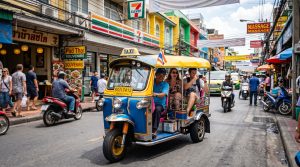
Bangkok has the BTS, MRT, boats, buses, taxis, and tuk-tuks. There is no single mode of transportation that’s suitable for every trip: the most practical solution is to combine the commuter train for long distances with boats or short walks.
The BTS is convenient for areas such as Siam, Silom, and Sukhumvit, while the MRT provides easy access to Chinatown and the area around Wat Pho from Sanam Chai Station. The Chao Phraya River boats are also useful for getting to the historic district. Checking the nearest station and pier before you head out helps you avoid unnecessary detours.
These guidelines help you choose the best mode of transportation for each situation:
- BTS and MRT: recommended for avoiding traffic jams and exploring the city’s modern areas.
- Public boats: a convenient way to visit landmarks and neighborhoods along the Chao Phraya River.
- Taxi: convenient when traveling with luggage, in the rain, or on routes without direct connections; always ask the driver to use the meter.
- Tuk-tuk: best for short trips and as a one-time experience; agree on the price before getting in.
- Walking: It works well within each neighborhood, although the heat makes it necessary to plan for breaks.
During rush hour, traffic can increase significantly. Avoid driving across the city whenever you can make the same trip by train or boat, and allow plenty of time if you need to get to the airport, a train station, or a scheduled event.
Where to Stay Based on the Type of Trip
Choosing the right area for your hotel can save you a lot of time. For a first-time visit, it’s best to stay near a BTS or MRT station, even if a room farther from public transportation is slightly cheaper.
Sukhumvit has numerous restaurants, hotels, and transportation links; Silom combines urban activity with proximity to the river; Siam is convenient for shopping and getting around; and the area along the Chao Phraya River offers a more peaceful and scenic stay. The historic district is attractive, although it has fewer rail connections than the modern districts.
An area for every type of person
Couples looking for a relaxing stay may prefer hotels along the river, while those who want to go out to dinner and get around easily tend to feel at home in Silom or Sukhumvit. For families, proximity to public transportation, a pool, and spacious rooms are often more important than a location that’s too central.
Before booking, check the actual walking distance to the station—not just the straight-line distance. Some avenues, elevated roads, and intersections can make walking routes more difficult. A hotel with good access allows you to return to rest during the hottest part of the day and resume your sightseeing in the afternoon.
Eating in Bangkok: From Street Stalls to Markets
Cuisine is an integral part of the experience and shouldn’t be limited to a quick dinner at the end of the day. In Bangkok, you can sample specialties from different regions of Thailand at street stalls, markets, small family-run restaurants, and contemporary eateries.
Chinatown is especially lively at night, though you can also enjoy good food at neighborhood markets and mall food courts. The latter make it easy to sample a variety of dishes in a comfortable setting. Our guide to must-try Thai dishes will help you recognize some dishes before ordering. Mixing popular spots with local restaurants usually offers a more well-rounded experience.
At street food stalls, it’s best to choose busy spots, check how often the ingredients are rotated, and ask for your food to be cooked to order. If you can’t handle spicy food well, make that clear when ordering, although interpretations may vary. Having your allergies written down in Thai helps prevent misunderstandings when you have a significant dietary restriction.
Practical Tips for Enjoying Bangkok
The weather directly affects the pace of your visit. The early morning hours are ideal for visiting temples and going for walks, while midday can be set aside for lunch, resting, or visiting indoor attractions. A flexible itinerary works better than a packed schedule.
Between November and February, temperatures are usually somewhat more bearable, although this is also a very popular time of year. From March to May, the heat intensifies, and during the rainy season, heavy downpours can occur, often concentrated in a specific part of the day. A lightweight rain jacket and plenty of water are useful for much of the year.
Before you go out, keep these recommendations in mind:
- Dress respectfully in places of worship: cover your shoulders and legs, and remove your shoes when instructed to do so.
- Do not point at images of Buddha with your feet; it is considered disrespectful.
- Carry small amounts of cash: some stalls, boats, and local businesses do not accept credit cards.
- Be wary of unexpected closures: check the information at the entrance or on official channels before accepting an alternative.
- Protect your documents: carry a copy with you and keep the original in a safe place when you don’t need it.
- Get the right insurance: review medical coverage, activities, and potential issues with your luggage.
It’s also worth checking out our tips for traveling to Thailand before you pack. Taking care of things like money, connectivity, and travel documents ahead of time leaves you more time to enjoy your destination.
How to Include Bangkok in a Trip Through Thailand
Bangkok serves as the gateway to the country, but it deserves to be treated as a destination in its own right, not just a stopover. With a well-planned three-day itinerary, you can experience the city’s heritage, cuisine, and local life before continuing on to Ayutthaya, Chiang Mai, the islands, or the beaches in the south.
At One More Destination, we design custom trips to Thailand tailored to your pace, interests, and available time. Our local team can incorporate Bangkok into a cohesive itinerary, select the sights that truly suit you, and avoid trips that offer little value. You’ll enjoy the city much more when each day has a clear purpose and there’s still room to be surprised.