Sukhothai is one of Thailand’s major cultural destinations: a former capital surrounded by ponds, Buddha statues, stupas, and temples that offer insight into the country’s historical and artistic origins. Its archaeological park can be explored at a more leisurely pace than other Thai archaeological sites and fits particularly well into an itinerary between Bangkok and the north.
This guide brings together the must-see temples, the different areas of the park, and practical tips for planning your visit. It also explains how much time you should set aside, how to get around, and why it’s worth staying overnight in Sukhothai rather than treating it as a rushed day trip.
Why Sukhothai Plays a Vital Role in Thai History
Sukhothai was the capital of one of the first great Siamese kingdoms, which reached the height of its prosperity during the 13th and 14th centuries. During this period, a distinctive artistic style developed, recognizable in the serene-featured Buddha figures, the lotus-bud-shaped stupas, and the combination of Khmer, Mon, and Sinhalese influences.
Historical tradition links King Ramkhamhaeng to the political and cultural consolidation of the kingdom, the spread of Theravada Buddhism, and the development of an early form of the Thai script. It is important, however, to understand Sukhothai as part of a complex historical process and not as the isolated origin of all the elements that define modern Thailand.
Over time, regional power shifted to Ayutthaya, and Sukhothai lost its influence. Its temples were partially abandoned, although the complex retained enough historical and architectural significance to become one of the most important archaeological sites in Southeast Asia.
The historic city of Sukhothai, along with Si Satchanalai and Kamphaeng Phet, has been a World Heritage Site since 1991. The inscription recognizes the value of the early models of Siamese architecture and urban planning, as well as the kingdom’s ability to integrate different cultural traditions into a style of its own.
How is the Sukhothai Historical Park Divided?
The park is not limited to the central walled enclosure. The archaeological remains are spread across the central area and several sectors to the north, west, south, and east, so the experience varies considerably depending on the time you have available and your chosen mode of transportation.
The central area is home to the most famous temples and is easy to explore by bike or on foot. The outlying areas are more spread out and offer an even more peaceful atmosphere, with monuments surrounded by greenery, country roads, and small hills.
Central Area
The central area is the historic heart of the old city and the best place to start your visit. Within the city walls are Wat Mahathat, Wat Sa Si, Wat Si Sawai, and other temples connected by flat paths, ponds, and landscaped areas.
This is the easiest area to find your way around, but it’s also the most crowded. Arriving early lets you explore its monuments when it’s cooler and enjoy the softer light on the sculptures and fountains.
Northern Area
The northern area is home to Wat Si Chum and Wat Phra Phai Luang, two very different temple complexes. Wat Si Chum is one of Sukhothai’s most iconic landmarks, while Wat Phra Phai Luang offers insight into the influences that predated the kingdom’s golden age.
The distance from the central complex is manageable by bike, although it’s a good idea to allow plenty of time. This section lets you venture off the main route and observe the transition from the historic district to the rural surroundings.
Western and Southern Regions
The western area is home to temples nestled among hills and greenery, including Wat Saphan Hin. The climb up to its large standing Buddha requires a bit of physical effort, but it’s rewarded with a sweeping view of the Sukhothai plain.
The southern area is home to temples such as Wat Chetuphon and Wat Chedi Si Hong. These areas are less crowded and more spread out, making them ideal for those who have a full day to spare or are looking for a leisurely visit off the beaten path.
What to See in Sukhothai: Must-See Temples
The park contains numerous archaeological sites, but trying to visit them all in just a few hours can turn the tour into a rushed succession of ruins. The best approach is to combine several major temples with some minor ones, which will allow you to appreciate architectural differences and distinct atmospheres.
The following selection covers the most iconic monuments and helps you plan a well-rounded itinerary. Each temple offers a unique perspective on the religion, power, and art of the ancient kingdom of Sukhothai.
Wat Mahathat
Wat Mahathat was the city’s main religious and ceremonial center. Its size, its monumental Buddhas, and its numerous stupas reflect the importance it held within the royal compound.
The complex combines different phases of construction and features some of the most characteristic elements of the Sukhothai style. The central stupa, shaped like a lotus bud and surrounded by smaller structures, is one of the park’s most recognizable landmarks.
It’s worth taking the time to explore the site rather than just photographing the main façade. As you walk among the columns, ponds, and Buddha statues, you’ll gain a better understanding of the complex’s original scale and its role as the spiritual heart of the capital.
Wat Sa Si
Wat Sa Si is located on a small island surrounded by water and connected by a footbridge. Its location, the Sinhalese-influenced stupa, and the image of a walking Buddha create a particularly harmonious composition.
It is one of the most pleasant places to stop by in the late afternoon. The reflections on the pond and the silhouette of the temple allow visitors to appreciate the relationship between architecture, landscape, and religious symbolism that defines much of the park.
Wat Si Sawai
Wat Si Sawai is notable for its three Khmer-inspired towers, which are quite different from the typical Buddhist stupas found on the grounds. Their appearance reflects the influence of the Khmer Empire and suggests a possible religious function prior to the site’s conversion to Buddhism.
A comparison with Wat Mahathat reveals how Sukhothai integrated and transformed earlier styles. It is an important stop for understanding how the kingdom’s architecture arose from multiple cultural exchanges.
Wat Si Chum
Wat Si Chum houses the large seated image of Phra Achana, visible through a narrow opening between high walls. The scale of the figure and the enclosed space surrounding it create a very different impression from that of the open temples in the central compound.
The statue stands approximately fifteen meters tall and has become one of Sukhothai’s landmarks. Its proportions, serene expression, and elongated fingers reflect the refined features of classical Sukhothai sculpture.
Wat Phra Phai Luang
Wat Phra Phai Luang is one of the oldest temple complexes in the area. Its ruins show a strong Khmer influence and help reconstruct the evolution of the settlement before Sukhothai established itself as an independent capital.
Although it is more fragmented than other temples, it is of considerable historical interest. The smaller number of visitors allows you to explore it at a leisurely pace and appreciate the different cultural layers superimposed at the site.
Wat Saphan Hin
Wat Saphan Hin is located on a hill to the west of the park and is reached via a stone-paved path. At the top stands a large standing Buddha that overlooks the plain.
The climb is short, but the terrain can be uneven and hot during the middle of the day. It’s worth the visit for the secluded atmosphere and the sweeping views of the Sukhothai landscape.
Wat Chetuphon
Wat Chetuphon houses depictions of the Buddha in various postures, including standing and walking figures. It is located south of the walled city and generally attracts fewer visitors than the temples in the city center.
Its large brick and stucco structures offer a glimpse into another facet of local religious art. Including it on the tour helps prevent the visit from being too concentrated and showcases the true scope of the former capital.
Recommended One-Day Itinerary in Sukhothai
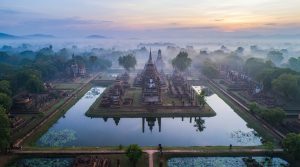
A full day gives you time to see the main temples without rushing, as long as you start early. A bicycle is usually the most practical way to combine the central area with the northern sector and a few out-of-town visits.
A well-balanced itinerary could start at Wat Mahathat and continue on to Wat Sa Si and Wat Si Sawai. From there, head north to visit Wat Si Chum and Wat Phra Phai Luang, saving the afternoon for a temple in the western or southern part of the city.
- Early-morning entry and a detailed tour of Wat Mahathat.
- A tour of Wat Sa Si and the nearby temples in the central complex.
- Stop at Wat Si Sawai to see the Khmer influence.
- Trip to Wat Si Chum and Wat Phra Phai Luang.
- Rest during the hottest part of the day.
- Visit Wat Saphan Hin or Wat Chetuphon in the afternoon.
- I head back to the central area to enjoy the last of the light.
This itinerary can be shortened if you only have a few hours, but it’s best to resist the temptation to include too many temples. The experience is better when you have time to walk, look around, and rest between one site and the next.
How many days should you spend in Sukhothai?
One night and a full day are the minimum recommended for visiting Sukhothai at a leisurely pace. Arriving in the afternoon, staying overnight near the park, and entering first thing the next morning helps avoid cramming your visit between long trips.
With two nights, you can explore different areas of the park, spend more time taking photos, and get to know the modern city or the local markets. It’s also easier to include a trip to Si Satchanalai, another important historical site linked to the ancient kingdom.
| Time available | Recommended visit | Pace |
|---|---|---|
| Half Day | Central Area and Wat Si Chum | Intense |
| One day | Central and northern areas, plus an outer temple | Balanced |
| Two days | All the main areas and a leisurely tour | Leisurely |
| Three days | Sukhothai and a day trip to Si Satchanalai | Fully booked |
For a cultural tour of the country, Sukhothai is an especially good stopover between Bangkok and Chiang Mai. On our customized trips to Thailand, we can incorporate it into an itinerary tailored to each traveler’s available time, pace, and interests.
How to Explore Sukhothai Historical Park
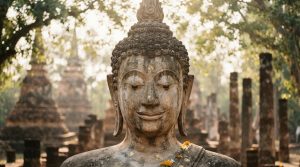
Bicycles are the most popular way to explore the park. The terrain is mostly flat, the distances within the central area are manageable, and there are rental shops near the park entrances and accommodations.
Walking works well if you’re only visiting the central area, but it’s impractical for getting to the northern and western sectors. For people with limited mobility, families, or travelers who prefer to avoid the heat, a car with a driver or a tuk-tuk can make it easier to get between areas.
- On foot: suitable for a brief visit to the main grounds.
- By bike: the best combination of freedom, affordability, and pace.
- By car: convenient for remote areas or during the hottest part of the day.
- With a guide: recommended for understanding the history and symbolism of the temples.
No matter which mode of transportation you choose, it’s best to plan your route before you set out. Distances can be misleading on a map, and traveling without a clear route can take up a good part of the day.
Best Time of Year and Best Time of Day to Visit Sukhothai
The cooler months tend to offer the most pleasant conditions for biking and walking in the park, especially between the end of one year and the beginning of the next. This time of year coincides with a greater influx of visitors, so accommodations may fill up sooner.
During the hottest months, it’s best to start at sunrise, take a break at noon, and resume the tour in the afternoon. During the rainy season, downpours can disrupt the itinerary, though they also result in lush vegetation and full ponds.
To plan a comprehensive itinerary around the country, it’s helpful to check out our guide on the best time to travel to Thailand, since conditions vary between the north, Bangkok, and the beach areas.
The early morning is usually the best time to visit the temples, when temperatures are milder and there are fewer visitors. The late afternoon light is also ideal for photography, especially at Wat Mahathat and Wat Sa Si.
How to Get to Sukhothai
Sukhothai is located in north-central Thailand, between Bangkok and Chiang Mai. The modern city, commonly known as New Sukhothai, is separate from the historic park, so it’s a good idea to check the exact location of your accommodations before booking.
From Bangkok, you can get there by bus, plane, or a combination of train and road. From Chiang Mai and other cities in the north, there are road connections, although schedules and frequencies may change. Booking well in advance makes travel easier during peak seasons and holidays.
Where to Stay
Staying near the historic park is more convenient for getting there early and avoiding extra travel. This area has small hotels, local lodging options, and services geared toward visitors to the ruins.
The new city offers more restaurants, shops, and transportation options. It may be convenient for travelers arriving late or continuing their journey by bus, although it requires arranging transportation to the park.
Tips for Visiting Temples with Respect
Sukhothai is an archaeological and religious site, not a stage set. Some images and structures hold deep significance for the Thai people, even though they are located within a historic site.
Do not climb on stupas, pedestals, walls, or sculptures to take a photograph. You should also avoid disrespectful poses in front of images of Buddha and follow the staff’s instructions. Preservation depends on the behavior of each visitor.
- Wear light clothing, but avoid overly revealing outfits in religious sites.
- Do not touch sculptures, reliefs, or stucco remnants.
- Please respect the restricted areas and protective barriers.
- Bring water, sunscreen, and insect repellent.
- Slow down on your bike near pedestrians and monuments.
Rules may vary depending on the temple or the celebration taking place during your visit. Observing how local visitors behave and following the signs is usually the best guide.
Common Mistakes When Planning a Visit
The most common mistake is to treat Sukhothai as a stopover between two long trips. Arriving at noon, visiting several temples in the heat, and leaving that same afternoon greatly reduces your enjoyment of the park.
It’s also common to confuse the modern city with the historic district, misjudge distances, or try to see too many areas in just a few hours. With a little planning, you can avoid unnecessary travel and repeated trips.
- Failing to check where the lodging is located.
- Start your visit during the hottest part of the day.
- Walking around the outdoor areas without considering the distances.
- Stick to Wat Mahathat and Wat Si Chum.
- Not setting aside time to take your time exploring the temples.
The solution is simple: get at least one night’s sleep, choose a realistic itinerary, and adjust your transportation plans to your physical condition and the temperature. Fewer, well-visited temples tend to leave a deeper impression than a long list rushed through.
Frequently Asked Questions About Sukhothai
Is Sukhothai worth visiting?
Yes, especially for those who enjoy history, architecture, and leisurely strolls. The park offers a more open and relaxed experience than Thailand’s other major sightseeing destinations.
It also provides context for a tour of the country, as it offers insight into the cultural developments that preceded the rise of Ayutthaya and Bangkok. Its atmosphere, ponds, and sculptures make the visit more than just a series of ruins.
Which is better, Sukhothai or Ayutthaya?
They are not comparable destinations. Ayutthaya is better connected to Bangkok and features large temples set within a more bustling urban environment, while Sukhothai offers a more orderly, green park that’s pleasant to explore by bike.
Those with time to spare may want to visit both former capitals, as they represent different periods and styles. If you have to choose, the decision will depend on your itinerary, the number of days available, and your interest in history.
Is it possible to visit Sukhothai with children?
The park is family-friendly because it has open spaces and relatively easy trails. Biking can make the visit a fun activity, as long as the children are used to riding and extreme caution is exercised.
It’s a good idea to avoid the midday hours, bring water, and not plan for too long a day. Alternating between visiting temples, taking breaks, and making short trips helps maintain a comfortable pace for the whole family.
Do I need to hire a guide?
It isn’t essential, but it does help you understand the site as a whole. Many of the ruins lack an obvious interpretation, and a guide can explain the function of the structures, the artistic styles, and the relationship between the different temples.
If you’re planning an independent visit, it’s a good idea to read up on the kingdom’s history beforehand and use an up-to-date map. That way, you’ll avoid viewing very different monuments as if they all belonged to the same historical period.
Sukhothai: A Stop to Understand Thailand
Sukhothai deserves more than just a quick visit. Its appeal lies not only in its grand monuments but also in the silence among the temples, the paths alongside the ponds, and the chance to explore an ancient capital at a leisurely pace.
The best way to enjoy it is to book at least one night, start early, and combine visits to the main temples with a trip to one of the outlying areas. Seamlessly integrated into the itinerary, Sukhothai adds historical depth and balance to a trip through Thailand.