Burmese names spark a lot of curiosity because they don’t follow the logic we’re used to in Spain or in much of the West. In Myanmar, there is no widespread tradition of last names as we understand them here, and furthermore, a person’s name does not necessarily change when they get married. That’s why learning about this custom is a simple and very entertaining way to better understand the country’s culture.
One of the best-known traditions is the connection between a person’s day of birth and the initial of their name. This idea stems from traditional Burmese astrology, in which each day is associated with a set of letters, a direction, and a symbol. This doesn’t mean that all families today follow it to the letter, but it remains a very recognizable part of Myanmar’s cultural imagination.
How Names Work in Myanmar
 The Burmese naming system is not based on fixed first and last names, but rather on personal combinations that may include one or more syllables with their own meanings. These meanings are often related to desirable qualities, elements of nature, beauty, strength, brilliance, or good omens.
This gives the name a much more flexible and symbolic dimension. A family surname is not inherited as the primary identifier, which is why two siblings can have very different names without sharing a common “second surname.” It is also common to find short names, compound names, and honorific forms that accompany the name depending on age or social context.
For anyone traveling to the country, this detail is particularly striking because it defies a basic expectation: not everyone fits the Western pattern of first name + last name. Understanding this helps avoid confusion when reading signs, reservations, documents, or conversations about well-known figures in Myanmar. If you’re planning a trip, here are some ideas and suggestions to help you travel to Myanmar with a better cultural foundation from the very beginning.
What does the day of birth have to do with a person’s name?
In Burmese tradition, the day of the week on which a baby is born can influence the choice of the first letter of the name. This association is part of the local astrological system and is used as a guide for finding names that “match” the day of birth.
The most interesting thing is that in Myanmar , they don’t just refer to seven days, but to eight astrological references. Wednesday is divided into two parts: Wednesday morning and Wednesday afternoon. That division explains why there are eight groups of letters instead of seven.
This does not mean that the process is rigid or identical in every family. Today, tradition and personal choice coexist, so while some people follow these guidelines, others prefer to choose a name based on its sound, meaning, or family preference. Even so, the connection between a name and a person’s birth date remains one of the country’s best-known curiosities.
Table of Baby Names Based on the Day They Were Born
If you want to have some fun figuring out what your Burmese name might be, this chart serves as a basic guide. Each day is associated with certain initial letters, and from there you can look up common names or combinations with positive meanings.
| Day | Associated initials | Examples of names |
|---|---|---|
| Monday | က (ka), ခ (kha), ဂ (ga), ဃ (gha), င (nga) | Kay, Khin, Nge |
| Tuesday | စ (sa), ဆ (hsa), ဇ (za), ဈ (zha), ည (nya) | Sanda, Swe, Zeya |
| Wednesday morning | လ (la), ဝ (wa) | Wai, War, Luu |
| Wednesday afternoon (Rahu) | ย (ya), ร (ra) | Ye, Yan, Yu |
| Thursday | ပ (pa), ဖ (pha), ဗ (ba), ဘ (bha), မ (ma) | Phyu, Myaing, Myint |
| Friday | သ (tha), ဟ (ha) | Thida, Thanda, Haymar |
| Saturday | တ (ta), ထ (hta), ဒ (da), ဓ (dha), န (na) | Nanda, Nyein, Htoo |
| Sunday | အ (a) | Aye, Ei, Ohn |
The table is a useful guide for understanding the general logic, but it should be viewed as a cultural tradition rather than a strict rule. In practice, the final name may also depend on its meaning, how it sounds, the family’s preference, or the influence of previous generations.
Why Do People in Myanmar Talk About 8 Days Instead of 7?
The explanation lies in traditional astrology. Wednesday is divided into two parts: from midnight to noon and from noon to midnight. The second part is associated with Rahu, an astrological figure that features prominently in the Burmese symbolic system.
That’s why, when someone mentions the “eight days” in Myanmar, they aren’t referring to a calendar week consisting of eight full days. It’s an astrological division that coexists with the standard seven-day week but plays a significant role in temples, rituals, names, and popular ways of interpreting birth.
This detail also appears in religious spaces, where each day is associated with a direction, a planet, and a symbolic animal. For travelers, paying attention to these associations helps them better understand pagodas, altars, and cultural explanations that might go unnoticed at first glance.
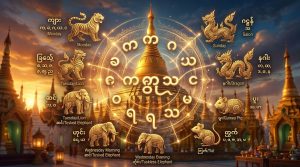
Directions and Symbols of the Burmese Astrological Calendar
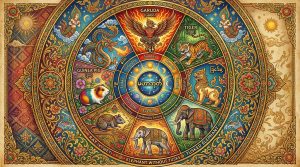
In addition to the initial letters, each day in the Burmese astrological system has its own symbolism. This relationship between day, direction, and animal is part of a way of organizing the world that is very different from the Western one and remains visible in various everyday and religious contexts.
Looking at this table isn’t just a fun way to choose a name. It also helps you understand why many temples in Myanmar have areas associated with the day of one’s birth. It’s a very interesting cultural insight for those who want to go a little beyond the typical list of trivia.
| Day | Address | Name in Burmese | Traditional symbol |
|---|---|---|---|
| Sunday | Northeast | Northeast | Garuda |
| Monday | This | တနင်္လာ | Tiger |
| Tuesday | Southeast | Anga | León |
| Wednesday morning | South | Vuddhahu | Elephant with tusks |
| Wednesday afternoon (Rahu) | Northwest | Rahu | Elephant without tusks |
| Thursday | West | Kawthara Pathe | Rat |
| Friday | North | Peshokhwa | Guinea pig |
| Saturday | Southwest | Chane | Naga |
An important note: When translating from Burmese to Spanish or English, transliterations may vary. That is why it is common to find slight differences in the spelling of certain days of the week or symbols, depending on the source consulted.
How to Choose Your “Burmese Name” in a Fun and Meaningful Way
If you want to try this exercise out of curiosity, the best way to start is by identifying the day you were born. If you were born on a Wednesday, it’s helpful to know whether it was before or after noon so you can better align with Burmese astrological tradition.
Then you can look at the letters associated with that day and search for names you like because of how they sound or what they mean. You don’t need to translate your name literally or find an exact equivalent. In fact, it’s more fun to use local logic: the right initial, a natural-sounding name, and a beautiful meaning.
Here’s a simple way to do it:
- Find your birth date.
- Check which letters are associated with that day.
- Choose one or two Burmese names that start with that initial.
- Go with the one that sounds best or the meaning that suits you best.
What’s interesting isn’t guessing the official name, but understanding how a culture connects identity, the calendar, and symbolism in something as everyday as naming a person.
Common Mistakes When Discussing Burmese Names
One of the most common misconceptions is that all Burmese names are necessarily based on astrology. This is not the case. While astrology is an important cultural reference, in today’s Myanmar, tradition, modernity, family preferences, and entirely personal choices all coexist.
People also tend to oversimplify things by saying that “they don’t have last names” and leaving it at that. The reality is more nuanced. The naming system is different, but that doesn’t mean it’s chaotic or lacks structure. It simply follows different historical and social rules.
Another common mistake is trying to convert a Burmese name into a perfect Western equivalent. The translation is rarely exact, because sounds, syllables, cultural nuances, and meanings come into play that do not always translate well from one language to another.
What This Custom Reveals About Myanmar
 Behind this tradition lies more than just a curious anecdote for travelers. Names in Myanmar reflect a different way of understanding identity—one that is less tied to the family surname and more open to symbolism, language, and cultural context.
They also show the extent to which astrology, religion, and everyday life have coexisted for centuries. A simple name can encapsulate beliefs, aesthetics, and tradition in just a few syllables, which is why this topic often fascinates first-time visitors to the country so much.
The next time you look at a calendar and think only of Monday, Tuesday, or Wednesday, remember that in Myanmar, your day of birth can determine which letters and symbols are associated with you—and even a different way of addressing you. And if you’re planning a short getaway or a longer trip, knowing these cultural insights will help you connect better with your destination and experience Myanmar from a different perspective.