Huế is the great historic city of central Vietnam and a particularly recommended stop for anyone who wants to understand the country’s imperial past beyond its landscapes and major cities. Its Imperial City, the tombs of the Nguyễn emperors, the Thiên Mụ Pagoda, the Perfume River, and a cuisine with its own distinct character make it well worth spending at least one or two days there.
Its location also makes it easy to include it in an itinerary that covers Hanoi, Da Nang, Hoi An, and the southern part of the country. At One More Destination, we can incorporate Hue into our custom tours of Vietnam, tailoring the visit to the pace, interests, and overall duration of the trip.
Why Huế Is Worth Visiting
Huế was the capital of Vietnam during the Nguyễn Dynasty, from 1802 to 1945, a period that left the city with palaces, temples, city walls, royal residences, and large funerary complexes. Much of this heritage is centered around the Perfume River, which flows through the city and helps illustrate how the ancient capital was organized.
The Huế Monument Complex was inscribed on the UNESCO World Heritage List in 1993. Although wars, fires, and the passage of time destroyed numerous buildings, conservation and restoration efforts have made it possible to appreciate a significant portion of the former political and ceremonial center of Vietnam’s last imperial dynasty.
Huế and the imperial history of Vietnam
The region’s historical significance predates the Nguyễn dynasty, but the monumental Hue that modern travelers visit took shape primarily in the early 19th century . After ascending the throne in 1802, Emperor Gia Long established his capital here and began developing a large fortified complex, which his successors expanded and modified.
For more than a century, Huế served as the center of the court, the imperial administration, and much of the country’s ceremonial life. The urban landscape was organized according to traditional Vietnamese principles and symbolic and geomantic references, with the Perfume River and the surrounding mountains playing a significant role.
From Imperial Capital to the End of the Monarchy
The Nguyễn dynasty ruled from Huế until 1945, although for much of that period Vietnam was under French influence and, later, French colonial rule. The city retained its role as the seat of the court even after the emperors’ actual political power had been considerably reduced.
In 1945, Emperor Bảo Đại abdicated, bringing an end to the Vietnamese monarchy. Huế thus ceased to be the imperial capital, but it retained an exceptional heritage that allows visitors to physically trace the various stages of that era.
Huế During the Vietnam War
The city sustained very severe damage during the Vietnam War, especially during the 1968 Battle of Huế, which took place during the Tet Offensive. The urban fighting damaged numerous historic buildings and resulted in a high number of casualties among both military personnel and civilians.
During those weeks, there were also executions and disappearances of civilians attributed to communist forces. Added to this was the massive destruction caused by the fighting and bombings. To better understand other aspects of the conflict in the south of the country, you can also visit the Cu Chi Tunnels, near Ho Chi Minh City.
What to See in Huế: Must-See Places
Huế’s heritage is not limited to the Imperial City. The emperors’ tombs are scattered throughout the surrounding area, while the Perfume River connects various points of interest, and daily life continues around the markets, pagodas, and neighborhoods located on both sides of the river.
For a first visit , it’s best to combine imperial heritage, local life, and cuisine. Trying to cram it all into just a few hours takes away from the appeal of a destination that’s best enjoyed when you have a little time.
Imperial City and Citadel of Huế
The Imperial City is Huế’s main landmark and the place we recommend starting your visit. The complex formed the political, administrative, and ceremonial heart of the Nguyễn capital and was protected by an extensive system of walls, moats, and gates.
The entire Citadel should not be confused with the area reserved for the imperial family. The complex was organized into different sections, including administrative and religious spaces, the Imperial City, and, within it, areas with much more restricted access linked to the court and the so-called Forbidden Purple City.
Among the sites worth visiting during the tour are the Ngọ Môn Gate, the Thái Hòa Palace, the Thế Miếu Temple, and the Hiển Lâm Pavilion, as well as courtyards, ceremonial gates, gardens, and reconstructed or restored buildings.
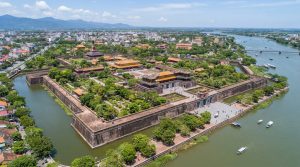
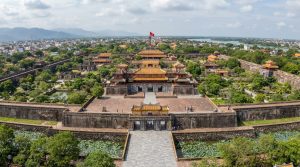
It’s a good idea to set aside several hours to explore the grounds. There’s no need to try to see every nook and cranny: it’s more interesting to understand how the court functioned, focus on the main buildings, and observe the differences between the ceremonial, residential, and religious spaces.
Imperial Tombs of the Nguyễn Emperors
The imperial tombs are one of the main reasons to spend a second day in Huế. They are not mere burial sites, but rather extensive architectural complexes featuring pavilions, temples, courtyards, lakes, gardens, sculptures, and ceremonial buildings.
Each emperor built his mausoleum in a different style. If we had to choose just a few, Minh Mạng, Tự Đức, and Khải Định offer a comparison of three very distinct styles, and these are the complexes most often included on a first visit.
- Minh Mạng Tomb: It stands out for its highly orderly layout, in which architecture, water, gardens, and the landscape come together to form a particularly harmonious whole.
- Tự Đức Tomb: It has a more scenic character, with ponds, pavilions, and spaces also designed as a retreat for the emperor.
- Khải Định Tomb: It is more compact and features a very noticeable blend of Vietnamese and European elements, with particularly elaborate interior decoration.
The tombs are spaced apart from one another and located far from the center, so it’s a good idea to plan your transportation before starting the tour. With a car and driver or an organized tour, it’s much easier to visit several of them in a single day without wasting time traveling between them.
Thiên Mụ Pagoda
The Thiên Mụ Pagoda is one of Huế’s most recognizable landmarks. It stands on a small hill next to the Perfume River, and its distinctive seven-story Phước Duyên Tower appears in countless images of the city.
The temple also holds significant religious and historical importance and continues to function as a Buddhist complex. Its location makes it easy to combine a visit there with a river tour or a visit to some of the imperial tombs located outside the city center.
Đông Ba Market
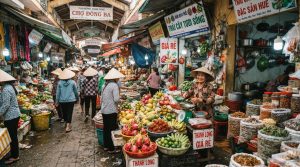
Đông Ba shows a completely different side of Huế. In contrast to the quiet of the imperial complexes, here you’ll find stalls selling food, fresh produce, clothing, household items, and souvenirs, along with the usual bustle of a large Vietnamese urban market.
It’s also a great place to explore the local cuisine without limiting yourself to tourist-oriented restaurants. As in any busy market, it’s best to look around first, compare prices, and enjoy the atmosphere without turning haggling into a competition.
Perfume River
The Perfume River, known as Sông Hương in Vietnamese, flows through Huế and defines much of the historic city. Its banks are perfect for a leisurely stroll and offer a different perspective on pagodas, bridges, and historic sites.
The well-known dragon-shaped boats offer river tours and can be used to reach places like Thiên Mụ. Late afternoon is one of the most pleasant times to visit the river, especially after a day spent sightseeing.
Trường Tiền Bridge and Downtown Huế
The Trường Tiền Bridge is another recognizable feature of the cityscape and connects the two banks of the Perfume River. Crossing it on foot takes you from the historic Citadel area to the more commercial and lively streets of the modern city center.
This part of Huế lets you round out the day with coffee shops, restaurants, walks along the river, and city life. It’s a nice change of pace after spending several hours visiting monuments and historic sites.
What to Eat in Huế
Cuisine is an important part of Huế’s identity and deserves a place on your itinerary. The city’s history as a royal capital fostered the development of a highly sophisticated culinary tradition, while its streets and markets still offer many popular dishes typical of central Vietnam.
The best-known dish is bún bò Huế, a rice noodle soup with an aromatic broth that is typically more robust than that of phở. It’s also worth trying specialties such as bánh bèo, bánh khoái, bánh nậm, or nem lụi, which offer a glimpse into a cuisine far more diverse than that of the most internationally renowned Vietnamese dishes.
How many days should you spend in Huế?
A full day allows you to see the must-see sights, but it requires you to make some choices. In that case, we would prioritize the Imperial City in the morning and spend the afternoon at Thiên Mụ and one or two tombs, ending our tour by the Perfume River.
With two days, the visit is much more balanced. On the first day, you can focus on the Imperial City, the Đông Ba Market, and the city center; on the second, on the mausoleums, Thiên Mụ, and the area around Huế.
Suggested Itinerary for a One-Day Visit to Huế
The priority should be to avoid unnecessary travel and not try to visit all the tombs. A reasonable itinerary can be organized as follows:
- Visit the Imperial City first thing in the morning.
- Explore the area around the Perfume River and visit the Thiên Mụ Pagoda.
- Choose one or two imperial tombs depending on the time available.
- Return to the city center to visit Đông Ba Market or take a stroll along the riverbanks in the late afternoon.
The choice of tombs can be tailored to the traveler’s interests: Minh Mạng for scenic harmony, Tự Đức for a more romantic setting, and Khải Định for more unique and ornate architecture.
Suggested Itinerary for a Two-Day Visit to Huế
With two days, you can split your time between the historic center and the surrounding areas, which reduces travel time and allows you to explore each place at a much more leisurely pace.
- Day 1: Imperial City, Đông Ba Market, Trường Tiền Bridge, downtown, and a stroll along the Perfume River.
- Day 2: The tombs of Minh Mạng, Tự Đức, and Khải Định; Thiên Mụ Pagoda; and return to Huế in the late afternoon.
This itinerary works especially well for those who appreciate history and architecture. If cuisine or local life is more important to you on this trip, it’s worth skipping a few sightseeing stops and setting aside time for markets, neighborhoods, and restaurants.
How to get to Huế
Huế is well-connected to the main destinations in central Vietnam. Phú Bài Airport serves domestic flights, while the train allows you to reach Huế from cities such as Hanoi, Đà Nẵng, or Ho Chi Minh City via the country’s main railway line.
For many itineraries, the road or train connection from Đà Nẵng and Hội An is particularly convenient. This allows you to include Huế in a tour of central Vietnam without having to return to Hanoi or Ho Chi Minh City to catch a flight.
Getting there by plane
Phú Bài Airport is Huế’s main airport and is located outside the city center. It primarily serves domestic flights, so travelers arriving from Europe usually enter Vietnam first through one of the major international airports and then continue their journey by air or land.
Before booking, it’s a good idea to compare the flight with alternatives by train or road. On a trip through the central part of the country, traveling from Đà Nẵng may be a better option than adding another flight.
Arriving by train
The railroad is an interesting option for those traveling through Vietnam from north to south or in the opposite direction. Huế is part of the line connecting Hanoi and Ho Chi Minh City and provides access to other major destinations along the route.
The stretch between Huế and Đà Nẵng is also appealing for its coastal and mountainous scenery. If the schedule fits your itinerary, the train can become part of the journey itself —not just a means of transportation.
Getting There by Car
From Đà Nẵng and Hội An, it is common to travel to Huế by road, whether by private vehicle, organized tour, or bus. This option makes it easy to make stops along the way and tailor the itinerary to the traveler’s interests.
When we plan a complete itinerary, we consider the order of the stops and the actual time spent on each transfer. Huế fits particularly well into itineraries that connect the north and south via the central region.
When to Travel to Huế
The climate in Huế is different from that of northern and southern Vietnam, so it is not advisable to apply a single weather recommendation to the entire country. The central region can experience periods of intense heat and a season of heavy rainfall, especially in the second half of the year.
The months with more moderate temperatures are generally more comfortable for sightseeing, since visiting the Imperial City and the tombs involves quite a bit of walking outdoors. During hot weather, we recommend starting early, bringing water, and setting aside the midday hours for shorter visits or breaks.
Practical Tips for Visiting Huế
Planning makes a significant difference in Huế because the main attractions aren’t all concentrated in the city center. Before setting out, it’s a good idea to decide which tombs you want to visit and group your stops together in a logical way.
- Start early: the early morning hours are usually the best time to explore open spaces.
- Don’t try to see everything: carefully selecting two or three sites will allow you to enjoy your visit much more.
- Set aside plenty of time for the Imperial City: rushing through it prevents you from grasping the scale of the complex.
- Wear comfortable shoes: there’s quite a bit of walking both in the Citadel and at the mausoleums.
- Respect religious sites: Thiên Mụ and other temples are still active places of worship.
- Check hours and admission before you go: they may change due to renovations, events, or management decisions.
It’s also a good idea to leave some wiggle room in your itinerary. Rain, heat, or a visit that turns out to be more interesting than expected can easily throw off the times you’ve calculated on paper.
How to Combine a Visit to Huế with a Tour of Vietnam
Huế is particularly worthwhile as part of a trip that takes in various regions of the country. To the north, it can be combined with Hanoi, Ha Long Bay, or the mountains of Sapa; to the center, with Đà Nẵng and Hội An; and to the south, with Ho Chi Minh City and other destinations.
If the journey continues to the southernmost tip, the Mekong Delta and its floating markets offer a very different experience. Combining such diverse regions helps you appreciate Vietnam’s diversity rather than focusing the trip solely on its best-known cities.
Huế is particularly well-suited for travelers interested in Vietnamese history, architecture, cuisine, and culture. With one or two well-planned days, it’s possible to understand why the former imperial capital remains one of the country’s most culturally rich destinations and how to naturally incorporate it into a broader itinerary through Vietnam.