Vietnam is one of those destinations that surprises in every corner, also on the plate. Its gastronomy is rich, complex and, in some cases, decidedly challenging for a Western palate. If you already know pho, bánh mì or spring rolls, get ready to discover the other side of Vietnamese cuisine: the one that does not appear in conventional tourist guides and the one that makes many travelers, upon returning, not quite sure whether to report what they ate.
At One More Destination we have been organizing trips to Vietnam for years and we have witnessed firsthand how the local cuisine can be as fascinating as it is bewildering. This selection of dishes is for the bravest, but also for those who want to understand Vietnam from the inside: with curiosity, respect and some humor.
The strangest dishes you can find in Vietnam
Each of these dishes has a cultural context, an origin and, in many cases, medicinal properties attributed by local tradition. They are not just curiosities at a fair: they are part of the gastronomic heritage of a country with more than four thousand years of culinary history.
1. Trứng Vịt Lộn – Egg with duck fetus
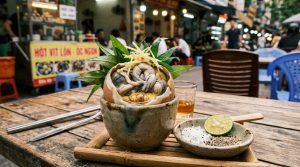
This is probably the dish that generates the most reactions from western travelers. It is a boiled duck egg with the embryo about to hatch inside, eaten with thin slices of fresh ginger, mint and a little salt. In Vietnam it is considered a very nutritious food, especially suitable for growing children and pregnant women, due to its high protein and calcium content.
It is commonly eaten as a breakfast or snack, and is sold in street stalls throughout the country. The texture combines that of a boiled egg with something more solid, depending on the degree of development of the embryo. If you visit Hanoi or Ho Chi Minh City, it is very easy to find it.
2. Thịt Chó – Dog Flesh
Yes, dogs are eaten in Vietnam. It is a sensitive subject and should be approached with context. Dog meat consumption is deeply rooted in the culture of the north of the country, where it is considered a food with special properties. However, the mentality is changing significantly, especially among the younger generations in Hanoi and Ho Chi Minh City, where there are growing movements to ban its consumption.
One More Destination does not recommend their consumption. Beyond the ethical considerations about the treatment of animals, there is a real health problem: dogs are not raised under any kind of veterinary control for this purpose, which makes them a major vector of diseases.
3. Chả Rươi – Sea worm pancakes.
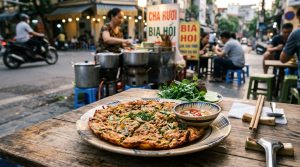
The rươi is a type of brackish water marine worm that lives in the estuaries of northern Vietnam, especially in Hai Duong province. For centuries, their catch was strictly seasonal: only in early autumn, when they emerge en masse from the bottom. Today there are breeding farms that allow it to be consumed all year round, although the wild seasonal version is still the most valued.
The traditional preparation mixes the worm with lime leaves, beaten egg and minced pork before frying it into pancakes. The result is surprisingly aromatic, with a pronounced umami flavor that has nothing to do with what the appearance of the ingredient might suggest. It is believed to help relieve joint pain and strengthen the immune system. It is usually served with rice or vermicelli.
4. Thịt Rắn – Snake Flesh
In Vietnam, the snake is not just an ingredient: it is a whole gastronomic experience. Cobra is the most popular variety, although water snake is also eaten in many specialized restaurants. What distinguishes these establishments is that the animal is prepared at the table: the heart is served beating in a glass of rice liquor, and the blood is drunk mixed with the same drink.
The rest of the animal is cooked in multiple ways: grilled, fried, stewed or on skewers wrapped in leaves. The fried skin acquires a crunchy texture comparable to that of cracklings. Tradition attributes aphrodisiac and energizing properties to snake meat and blood, which explains its popularity in restaurants frequented by local men.
5. Thịt Ếch – Whole Frog
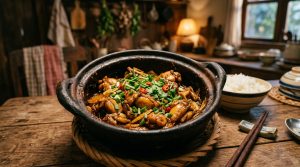
Frog legs are a well-known delicacy in Europe, but in Vietnam the logic is different: here the frog is eaten whole, except for the head. The skin is fried separately and served as a crispy snack, similar in texture to potato chips. The rest of the body is prepared in various ways; the most widespread is sautéed with bamboo shoots and seasonal vegetables.
Frog has a well-established nutritional reputation in Vietnamese folk medicine. It is dried and shredded for easy consumption by children, and in some northern regions it is considered especially suitable during the recovery period after illness.
6. With Nhộng – Fried silkworm chrysalis
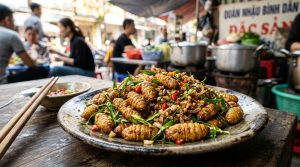
Once the silkworm finishes its work producing thread, in Vietnam comes its second act: the pupae are fried and eaten as a snack, with a mild, slightly earthy flavor reminiscent of roasted nuts. It is one of those dishes that, once you get past the visual barrier, turn out to be more pleasant than expected.
Their consumption is so integrated into the local culture that it is said that practically all Vietnamese have eaten them at least once. They are easily found in markets and street stalls, especially in the northern regions where silk production is more traditional. Today they are also marketed as a packaged snack in supermarkets in Hanoi.
7. Thịt Baba – River Turtle
The river turtle has a special place in traditional Vietnamese medicine. Its meat and blood are considered a therapeutic food: it is prescribed to strengthen the immune system, soothe chronic pain and accelerate the recovery of the sick. In some specialized restaurants, the animal is slaughtered at the table and the blood is mixed with rice liquor for a ritual toast.
It is important to note that several species of turtle in Vietnam are protected by environmental legislation. River turtle consumption raises legitimate sustainability and conservation questions that any responsible traveler should be aware of.
8. Tiết Canh – Raw Blood Pudding
This is the dish before which it is advisable to be more cautious. Tiết canh consists of raw blood of duck, chicken, goat or pork, curdled with fish broth and served cold with pieces of cooked meat, peanuts, fresh herbs and lemon juice. It has the appearance of a dark jelly and its texture is similar to that of a soft custard.
We have tried it first hand and can say that the taste is more neutral than it seems, but the health risk is real. As it is uncooked blood, it is a potential source of pathogens such as salmonella or avian flu. Vietnamese health authorities have launched several campaigns to discourage its consumption, especially after outbreaks linked to this dish. If you visit Vietnam, this is one we recommend you pass up.
9. Thịt Chuột Đồng – Rice paddy rat.
In southern Vietnam, especially in the Mekong Delta, the paddy rat is a seasonal food closely linked to the agricultural cycle. After the rice harvest, comes the “second harvest”: farmers hunt the rats that have fattened up for months feeding in the fields. The result is clean, fat-free meat, with a taste that many compare to chicken or rabbit.
Preparation involves burning them lightly to remove the hair and any external parasites, cleaning them well and grilling them. They are served with ginger, lemon juice and fresh vegetables. It is not a subsistence dish: in many restaurants in the delta it is sold as a regional specialty at considerable prices.
10. With Đuông Dừa – coconut beetle larvae.
We leave for the end the absolute protagonist of this list. Coconut beetle larvae are the most extreme delicacy of Ben Tre, the Mekong Delta province known as “the land of coconut trees”. These coarse white larvae grow inside coconut trunks and are eaten alive, mixed with fish sauce.
There is one practical detail to know before you dare: you must first bite the head. If this is not done, the larva can bite the tongue and, according to those who have experienced it, the pain is considerable. The texture is creamy and the taste is mild and slightly sweet due to the coconut feed. In recent years it has become a gastronomic tourist attraction in the delta, and there are restaurants that also serve them lightly fried for those who do not dare with the live version.
Where to try these dishes in Vietnam?
Most of these dishes are not found in tourist restaurants in downtown Hanoi or Ho Chi Minh City. To find them you have to move to local markets, residential neighborhoods or the rural areas of the Mekong Delta. The Thịt Rắn has its temples in Lệ Mật, a village on the outskirts of Hanoi specializing in snake, where there are a dozen restaurants that have been serving such dishes for decades. Ben Tre larvae can be found in floating markets in the delta or in riverside restaurants in the area.
If you want to explore the most authentic gastronomy of Vietnam, including its most surprising dishes, One More Destination can include these experiences in your personalized route. We will not serve these dishes by default on the trip menu, but if you want them to be part of your Vietnamese adventure, we can arrange it.
Weasel coffee: the rarity that is not a dish but deserves to be mentioned.
We could not close this list without mentioning cà phê chồn, the rarest and most expensive coffee in the world. Wild weasels consume ripe coffee beans, which partially ferment in their digestive tract before being expelled. The result, after a cleaning and roasting process, is a coffee with a mild flavor profile, no acidity and chocolaty notes.
It was originally a rare and genuinely special wild product. Today, however, most weasel coffee sold in Vietnam comes from intensive farms where the animals live in questionable conditions. If you want to try it, look for small-scale producers with animal welfare certification. The taste is worth the experience; the industrial production conditions are not.
Vietnam is a destination that leaves no one indifferent, and its gastronomy is a true reflection of that. From the most aromatic street dishes to the most unexpected ingredients, eating in Vietnam is a way of understanding the country. If you are thinking of visiting and want us to help you prepare a tailor-made trip, take a look at our trips to Vietnam or write to us directly.